



We’ve covered a lot of ground in this series. Speed belongs year-round. Mechanics and drills matter. Speed fits into the week and the year through consistent, low-volume exposure.
Now the hard part. How do you actually run this with 20 to 50 kids, limited space, limited time, and still make progress visible?
This one is a field guide. Less philosophy, more “here’s how to run it tomorrow.”

Large Groups: Organization Beats Complexity
Here’s the truth about coaching speed with a full class. It is not about building the perfect private-sector speed session. It is about repeatable organization.
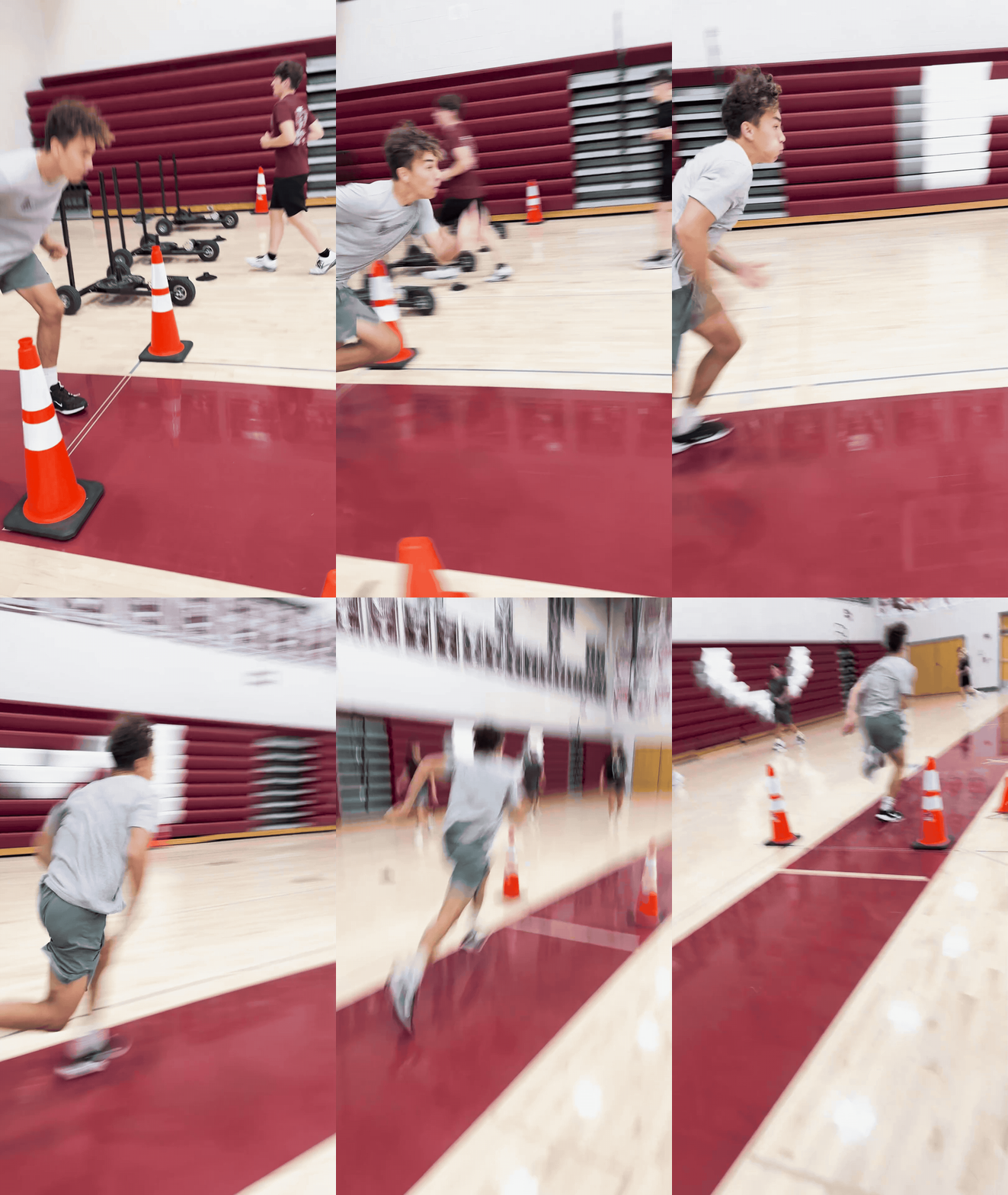
Large group speed training works when the setup is clear. When athletes know where to start, when to go, what to focus on, and where to go next, the session runs itself. When any of those are unclear, it turns into disorder fast.
So we keep the logistics simple:
Clear start line
Clear finish line
Clear lanes or sprint paths
High intent (max effort)
Low volume (3-8 reps)
Built-in rest while other groups run
One main cue or focus for the day
A known spot to go after each rep
Other stations that athletes complete
That’s it. None of it is fancy. All of it is repeatable.
Jobs for Athletes Who Aren’t Running
Athletes who aren’t sprinting don’t always need a complicated job. Sometimes their job is simply to recover and be ready to sprint fast again. That is part of the lesson.
Other times, they can help the session run smoother:
Timing or reading the laser
Setting or resetting cones and spacing
Watching for one coaching cue on the runner
Filming a rep
Recording a number
Or doing one of their Atomic Stations
But don’t feel like every athlete has to be busy every second. Building organized rest into the structure is good coaching.
A Note on Technology
Lasers, tape measures, jump mats, and the SHREDmill are great tools because they give athletes instant feedback. Seeing a number creates buy-in, and buy-in creates intent.
But you do not need expensive equipment to start. You can coach speed with cones, open space, a consistent setup, short reps, clear intent, and good organization. Plenty of fast athletes were built with a stopwatch and a line on the ground.
Technology helps, but structure matters more. Get the organization right first. Add tools when you can.
Tracking: Simple and Visible
Tracking is where speed work becomes real for athletes. A number they can chase is a number they will show up for.
Depending on the setting, we track things like:
10-yard and 40-yard times
Fly times or top speed
Vertical jump
Pro agility
Other KPIs that fit the group
All that data has to live somewhere and actually be useful. We keep ours in Coachlytics, which makes it easy to log results, track PRs, and pull an athlete's history in a few seconds. If you want the deeper version of how we think about tracking, we covered it in Tracking What Matters and Gamify the Grind.
Here’s the key. We are not trying to track everything every day. We are trying to give athletes enough feedback to see improvement and connect their training to something real.
Good tracking answers a few simple questions for the athlete:
Am I getting faster?
Am I more explosive?
Did I hit a PR?
How do I compare to my previous self?
Where do I stand right now?
Make It Visible
Visibility is the whole game. Athletes need to see their numbers. When athletes see their progress they become hooked! That might come through leaderboards, PR boards, athlete profiles, testing reports, class records, or grade-level comparisons.
When progress is visible, training means more. A kid who sees his fly 10 drop by a tenth or even a hundredth is a kid who wants to run again.
Don’t Let Tracking Kill the Session
One warning. Tracking should support the session, not take over the session.
If your tracking system creates long lines, slows the pace, or kills sprint intent, it is not helping. The best tracking system is the one simple enough to use consistently.
A few principles we hold to:
Track what matters most.
Keep the setup consistent so comparisons are fair.
Make progress visible to athletes.
Celebrate PRs, not just rankings.
Use data to start conversations, not just leaderboards.
Never let data collection ruin the training effect or environment.
Final Thoughts
You do not need perfect individualization to coach speed with a big group. You need repeatable organization.
Set your lines. Run your waves/groupings/stations. Catch a number and make it visible. Prioritize engagement and enthusiasm. Do that consistently, and a room full of kids can train fast, stay organized, and actually see themselves improve.
That wraps up our Speed Series. Thanks for following along. I’m interested to know, what does speed work look like in your setting?
Reply and let me know what’s working, what’s messy, and what you’re still figuring out. I read and try to respond to every email.
Keep pursuing excellence,
Preston Pedersen, M.Ed., CSCS
Strength & Speed Coach • Pursuit PE ⚡️
★ Paid Subscriber Resources
This week’s paid resource is the Large Group Speed Session Template and Checklist. It’s a one-page planner you can fill out before class to organize your setup, waves, reps, cue, and tracking method, plus a checklist to keep your session fast and your data clean. Scroll down to grab it.

If you would like this resource and access to all of our previous articles and resources consider becoming a paid subscriber. Many schools will pay for the subscription as this is a professional development and teacher quality publication.
Looking for more?
From APRE to VBT to Programming Mastery, every Pursuit PE series is organized and ready in one spot. Browse the full Series Library to find the tools and systems that fit your program.
